

Sustainability · 2025
In this section52 topics
- Sustainability Policy3 items
- Sustainability Goals & UN SDGs3 items
- Policy Review2 items
- Impacts on Stakeholders — Overview1 item
- Business Value Chain1 item
- Stakeholder Analysis2 items
- Environmental Sustainability — Overview1 item
- Environmental Policy & Guidelines3 items
- Environmental Policy Review3 items
- Energy — Plan & Guidelines2 items
- Energy — Electricity Consumption1 item
- Energy — Fuel Consumption1 item
- Energy — Targets3 items
- Energy — Performance & Outcomes2 items
- Water — Plan & Guidelines3 items
- Water — Withdrawal, Discharge & Consumption1 item
- Water — Targets2 items
- Water — Performance & Outcomes2 items
- Waste — Plan & Guidelines2 items
- Waste — Generation, Disposal & Recycling1 item
- Waste — Targets1 item
- Waste — Performance & Outcomes2 items
- GHG — Plan & Guidelines2 items
- GHG — Emissions1 item
- GHG — Emissions Verification1 item
- GHG — Principles & Standards1 item
- GHG — Targets1 item
- GHG Targets — Other Targets1 item
- GHG — Performance & Outcomes2 items
- Environmental Legal Incidents1 item
- Other Environmental Management1 item
- Social Policy & Guidelines4 items
- Social Policy Review3 items
- Social — Principles & Standards Practised1 item
- Human Rights Due Diligence1 item
- Employees — Plan & Guidelines3 items
- Employees — Workforce2 items
- Employees — Remuneration & Provident Fund1 item
- Employees — Training & Development1 item
- Employees — Occupational Health & Safety2 items
- Employees — Labour Relations1 item
- Employees — Employee Representation2 items
- Employees — Targets2 items
- Employees — Performance & Outcomes2 items
- Customers — Plan & Guidelines4 items
- Customers — Satisfaction Results1 item
- Customers — Targets2 items
- Customers — Performance & Outcomes2 items
- Community & Social — Plan & Guidelines3 items
- Community & Social — Targets1 item
- Community & Social — Performance & Outcomes2 items
- Law Violation Incidents1 item
Sustainability Policy
Has a Sustainability Policy
Yes
Policy Description
Since the main business involves Health, Safety, Security and Environment (HSSE), the Company must perform with the highest responsibility, and being in line with the theoretical principles. The Company must uphold the ethics and code of business conduct, moral principles and good virtue, has a good corporate governance as well as transparency in doing business that follows both the regulations of the public and private sectors in all activities involving the operation of the business and also refuses and opposes all forms of corruption in both the public and the private sectors in which all executives and employees have a duty to support, push and act in accordance with the policy and management framework in order to create credibility in the industrial sector, together with supporting the expansion plan according to the Company’s strategies in the future.
Vision
To strengthen leadership in the NDT (Non-Destructive Testing) service business by leveraging radiation properties, combined with innovative technologies and scientifically-based tools, to provide inspection, diagnosis, and certification services for life, property, and environmental safety. This includes developing and researching value-added services for economic benefit in various fields such as engineering, agriculture, medicine, public health, nutrition, food and medicine, and environmental protection, aiming to be the most trusted in ASEAN under the concept of "Best Service for Better Living."
Mission
To reach target customer groups through development plans that enhance business management and decision-making efficiency, and to strengthen knowledge, confidence, and systems that are of high quality and effectiveness for convenient, fast, accurate, and standardized operations both domestically and internationally, using cutting-edge technology and innovation. We remain committed to conducting business with integrity, morality, and ethics, coupled with responsibility towards the community, society, and the environment, as we have always done.
Policy Document Link
https://www.tndt.co.th/en/sustainability/sustainability-policy/sustainability-policy/
Sustainability Goals & UN SDGs
Has Sustainability Goals
Yes
Goals Description
The Company has reviewed its sustainability management policy annually by the Sustainable Development Committee, which has considered and adjusted the strategy for sustainable development to “Best Service for Better Living”, starting from 2023-2025, with an eye on the importance of changes in technology, new lifestyles, and considering changes in trends in various situations, including related regulations and internal and external factors that may affect stakeholders. In 2025, the Company has integrated the Sustainable Development Goals (SDGs) to be consistent with its business operations, with a commitment to achieve success in order to achieve the vision, strategic direction, and goals for sustainable development in all sectors, including reporting according to the said strategic framework, which must be in line with international GRI standards
UN Sustainable Development Goals
| SDG Goal |
|---|
| Goal 3 Good Health and Well-being |
| Goal 4 Quality Education |
| Goal 5 Gender Equality |
| Goal 6 Clean Water and Sanitation |
| Goal 7 Affordable and Clean Energy |
| Goal 8 Decent Work and Economic Growth |
| Goal 9 Industry, Innovation and Infrastructure |
| Goal 10 Reduce Inequalities |
| Goal 12 Responsible Consumption and Production |
| Goal 13 Climate Action |
| Goal 16 Peace, Justice and Strong Institutions |
Policy Review
Policy Reviewed This Year
Yes
Policy Changed This Year
No
Impacts on Stakeholders — Overview
Introduction
Reporting Guidelines The Company has determined the contents of this report, by assessing the impacts occurring in the business value chain on relevant stakeholders, in accordance with the “CSR Guidelines” of the SET and the SEC, the GRI Universal Standards, together with the Sustainable Development Goals: SDGs, to integrate in accordance with the business operation, and as a practical guideline in the head office and branch offices, also in form of social responsibility reports so that the business can be conducted orderly, transparent, fair, accessible, and verifiable. As a result, all stakeholders are confident in the management, leading to success in sustainable business operations.
Business Value Chain
Value Chain Description
“Best Service for Better Living”
“Deliver excellent services in terms of knowledge, expertise and experience, including the selection of various factors that are components of the work, as well as modern technology and environmental impact reduction, in order to create confidence in creating shared value, both financial and non-financial, with customers and stakeholders of all groups sustainably.”
Stakeholder Analysis
Introduction
In 2025, the Company applied the United Nations Sustainable Development Goals (UN SDGs) as a guideline for analysing and defining the scope of sustainability issues covering 3 dimensions including economic and governance dimensions, social dimensions and environmental dimensions.
Stakeholder Analysis
| Stakeholder Type | Stakeholders | Stakeholder Expectations | Response to Expectations | Communication Activities |
|---|---|---|---|---|
| Internal stakeholders | 2921 · Description: Employees | "SDGs issues"
Clause 3. Promote the well-being of all.
3.5 Strengthen the prevention and treatment of substance abuse and harmful alcohol use.
3.6 Reduce the number of deaths and injuries from road traffic accidents.
3.9 Reduce the number of deaths and illnesses from hazardous chemicals and from pollution and contamination of air, water, and soil.
----------------------------------
Clause 4. Promote Learning Opportunities
4.4 Increase the number of youth and adults with relevant skills, including technical and vocational skills, for employment, decent work, and entrepreneurship.
4.7 Ensure that all learners receive the knowledge and skills necessary to promote sustainable development, including education for sustainable development and sustainable living, human rights, gender equality, and the promotion of a sustainable culture.
----------------------------------
Article 5. Establish gender equality for all women and girls.
5.5 Ensure that women participate fully and effectively and have equal opportunities to lead at all levels of political, economic and public decision-making.
----------------------------------
Clause 6. Manage water sustainably and make it available to all.
6.2 Achieve the goal of providing all with adequate and equitable access to sanitation and hygiene, and ending open defecation.
6.3 Improve water quality by reducing pollution, eliminating waste dumping, and reducing the release of hazardous chemicals and materials.
6.4 Increase the efficiency of water use in all sectors and create assurances of sustainable water use and supply to address water scarcity.
----------------------------------
Article 8. Promote Sustainable Economic Growth
8.2 Achieve higher levels of economic productivity through diversification, technological advancement and innovation, including a focus on high value-added and labor-intensive sectors.
8.5 Achieve full and productive employment and decent work for all men and women, including youth and those with disabilities, and ensure equal pay.
8.6 Reduce the proportion of unemployed, uneducated and untrained youth.
8.7 Take immediate and effective measures to eliminate forced labor, end modern slavery and human trafficking.
8.8 Protect labor rights and promote a safe and secure working environment for all workers, including migrant workers.
----------------------------------
Article 9. Promote sustainable industry and innovation.
9.4 Upgrade infrastructure and improve industries to achieve sustainability by increasing resource efficiency and using cleaner and more environmentally friendly industrial technologies and processes.
9.5 Enhance scientific research to upgrade the technological capabilities of the industrial sector in all countries.
----------------------------------
Article 10. Reduce disparities both within and between countries.
10.3 Ensure equal opportunities and reduce inequalities in outcomes, including by eliminating discriminatory laws, policies and practices.
----------------------------------
Clause 12. Establish sustainable production and consumption patterns.
12.2 Achieve sustainable management and efficient use of natural resources.
12.4 Achieve environmentally friendly management of all chemicals and waste throughout their life cycles, in accordance with agreed-upon international cooperation frameworks, and significantly reduce their release into the air, water, and soil.
12.5 Reduce waste generation through prevention, reduction, reuse, and recycling.
12.7 Promote sustainable public procurement practices.
----------------------------------
Article 13. Take urgent action to address global warming.
13.1 Strengthen resilience and adaptive capacity to climate-related natural hazards and disasters in all countries.
13.2 Integrate climate change measures into national policies, strategies, and planning.
13.3 Develop education, awareness, and human and institutional capacity building on climate change mitigation, adaptation, and early warning systems.
----------------------------------
Article 16. Promote peace and equal access to justice.
16.3 Promote the rule of law at both national and international levels and ensure that everyone has equal access to justice.
16.5 Reduce corruption and bribery in all its forms.
16.6 Develop effective, accountable, and transparent institutions at all levels. | SDGs issues
----------------------------------
Clause 3. "Social Dimension"
• Human Rights
• Safety and Health
- Managing occupational health and safety in the workplace and service delivery.
- Managing risks to the working environment, health, and well-being of employees.
- Controlling and preventing hazards from the harmful use of drugs and alcohol.
- Managing safety to reduce injuries and fatalities from road accidents.
- Effectively managing emergencies, crises, and business continuity to prevent negative impacts on the business, society, community, and the environment.
----------------------------------
Clause 4. "Economic and Governance Dimension"
• Good Governance
- Train, promote, and instill in employees knowledge and skills in sustainable development, human rights, ethics, and anti-corruption.
- Communicate and build shared understanding through information technology so that everyone in the organization, including stakeholders, is aware of and follows the same policy.
"Social Dimension"
• Human Rights
• Innovation
(Knowledge Management)
- Strengthen the potential and develop personnel by providing knowledge, technical training, and essential work skills equally.
- Conduct training courses in safety and environment from both internal and external organizations.
- Transfer knowledge and professional expertise and exchange innovations with educational institutions, government agencies, and external organizations.
----------------------------------
Clause 5. "Economic and Governance Dimension"
• Good Governance
- Recruitment and selection of directors
The company will consider
essential skills,
specialized expertise,
and a diverse board structure, including at least one female director.
"Social Dimension"
• Human Rights
- Employment policy based on knowledge and expertise, without discrimination or prejudice based on gender, religion, race, and culture.
----------------------------------
Clause 6. "Social Dimension"
• Safety and Health
- Managing occupational health and safety in the workplace and service delivery.
- Managing risks related to the working environment, health, and well-being of employees.
"Environmental Dimension"
• Environment Management
- Responsibly managing waste and leftover materials by applying the 3R principle: Recycle, Reuse, Reduce, and properly and appropriately managing hazardous materials.
- Reducing greenhouse gas emissions by reducing the use of electricity, water, and fuel by 1% per year.
----------------------------------
Clause 8. "Economic and Governance Dimension"
• Customer Centric
- Enhancing service delivery by developing capabilities, training, educating, and creating new personnel who are ready and qualified according to international standards.
- Continuously developing, researching, and expanding the use of cutting-edge technology, tools, equipment, and innovations.
"Environmental Dimension"
• Human Rights
- The company has a non-discriminatory employment policy, respecting gender, religion, race, and culture, including providing fair welfare and compensation.
standards that employees should truly receive.
- Having projects/activities that support occupational health and safety to reduce incidents/accidents among all personnel equally.
----------------------------------
Clause 9. "Economic and Governance Dimension"
• Digital Transformation
- Implement Microsoft 365 programs to enhance work efficiency, communication, and timely coordination for agility, flexibility, and responsiveness to current uncertain situations.
- Utilize modern technology in service delivery to increase efficiency, reduce time, costs, and the risk to operators.
- Reduce resource consumption in work processes by creating and storing more electronic documents.
"Social Dimension"
• Innovation
(Knowledge Management)
- Develop and transfer knowledge and professional expertise and exchange innovations with educational institutions, government agencies, and external organizations.
"Environmental Dimension"
• Safety and Healthy
- Purchase, procure, and use environmentally friendly resources under the "Green Procurement" project, prioritizing "environment" as a key factor in resource procurement considerations alongside "quality, price, and delivery time."
----------------------------------
Article 10. "Social Dimension"
• Human Rights
- Respect human rights with equality and fairness, taking into account human dignity, individual freedom, and without discrimination based on origin, race, nationality, skin color, gender, age, language, religion, culture, class, or disability. Do not discriminate against or exclude anyone, and promote awareness and understanding of one's rights, duties, and responsibilities towards others and society.
----------------------------------
Article 16. "Social Dimension"
• Human Rights
- Respect human rights with fairness and equality, without discrimination or exclusion of anyone, and promote awareness and understanding of one's rights, duties, and responsibilities. | 2940 · Description: Social Event · 2941 · Description: Online Communication · 2942 · Description: Internal Meeting · 2946 · Description: Employee Engagement Survey · 2948 · Description: Training / Seminar |
| Internal stakeholders | 2913 · Description: Shareholders | "SDGs Issue"
Goal 5.5 Ensure equality for all women and girls.
5.5 Ensure that women participate fully and effectively and have equal opportunities to be leaders at all levels of political, economic and public decision-making.
----------------------------------
Article 8. Promote Sustainable Economic Growth
8.2 Achieve higher levels of economic productivity through diversification, technological advancement, and innovation, including a focus on high value-added and labor-intensive sectors.
8.5 Achieve full and productive employment and decent work for all women and men, including youth and those with disabilities, and ensure equal pay.
8.6 Reduce the proportion of unemployed, uneducated, and untrained youth.
8.7 Take immediate and effective measures to eliminate forced labor, end modern slavery, and combat human trafficking.
8.8 Protect labor rights and promote a safe and secure working environment for all workers, including migrant workers. | Clause 5. "Economic and Governance Dimension"
• Good Governance
- Recruitment and selection of directors
of the company based on consideration
of necessary skills,
specialized expertise,
and diversity of the
board structure, which
includes at least 1 female director.
"Social Dimension"
• Human Rights
- Employment policy based on
the principle of considering knowledge,
expertise without discrimination,
and without prejudice based on gender,
religion, race, and culture.
----------------------------------
Clause 8. "Economic and Governance Dimension"
• Customer Centric
- Elevate service levels through
developing the potential, training, educating, and creating
new personnel who are ready and possess qualifications according to international standards.
- Continuously develop, discover, and expand
technology, tools, equipment, and innovative technologies.
- Build good relationships with
customers by providing services that create satisfaction and engaging in
collaborative discussions to improve
service processes that meet customer needs and comply with standards.
"Environmental Dimension"
• Human Rights
- The company has established a policy of non-discriminatory employment, free from discrimination based on gender, religion, race, or culture, including the provision of fair welfare and compensation.
- The company has established policies and procedures to ensure that employees and their families receive the basic rights they are entitled to, taking into account equality, fairness, and equality to or exceeding the basic standards that employees should truly receive.
- There are projects/activities that support occupational health and safety in the workplace to reduce incidents/accidents for all personnel equally. | 2938 · Description: Visit · 2939 · Description: Press Release · 2944 · Description: Annual General Meeting (AGM) · 2945 · Description: Complaint Reception · 2949 · Other name: Providing information and meeting with analysts, investors, and shareholders at the mai Forum; producing newsletters; and disseminating information through the company's website, www.tndt.co.th. · Description: Others |
| External stakeholders | 2923 · Description: Customers | "SDGs issues"
Clause 3. Promote the well-being of all.
3.5 Strengthen prevention and treatment of substance abuse and harmful alcohol use.
3.6 Reduce deaths and injuries from road traffic accidents.
3.9 Reduce deaths and illnesses from hazardous chemicals and from air, water, and soil pollution and contamination.
----------------------------------
Article 9. Promote sustainable and innovative industries.
9.4 Upgrade infrastructure and improve industries to achieve sustainability by increasing the efficiency of resource utilization and using cleaner and more environmentally friendly industrial technologies and processes.
9.5 Enhance scientific research to upgrade the technological capabilities of industries in all countries.
----------------------------------
Article 10. Reduce inequalities both within and between countries.
10.3 Ensure equal opportunities and reduce inequalities in outcomes, including by eliminating discriminatory laws, policies, and practices.
----------------------------------
Clause 12. Establish sustainable production and consumption patterns.
12.2 Achieve sustainable management and efficient use of natural resources.
12.4 Achieve the management of all chemicals and waste throughout their life cycles in an environmentally friendly manner, within the framework of agreed-upon international cooperation, and significantly reduce their release into the air, water, and soil.
12.5 Reduce waste generation through prevention, reduction, reuse, and recycling.
12.7 Promote sustainable public procurement practices.
----------------------------------
Article 16. Promote peace and
equal access to justice.
16.3 Promote the rule of law at both the national and international levels and establish guarantees that all have equal access to justice.
16.5 Reduce corruption in office and bribery in all its forms.
16.6 Develop institutions that are effective, accountable, and transparent at all levels. | "SDGs issues"
Clause 3. "Social Dimension"
• Human Rights
• Safety and Health
- Occupational health and safety management in work and service delivery.
- Managing risks of the working environment, health, and well-being of employees.
- Controlling and preventing hazards from the misuse of drugs and alcohol.
- Managing safety to reduce injuries and deaths from road accidents.
- Managing emergencies, crises, and business continuity effectively to avoid negative impacts on business, society, community, and the environment.
----------------------------------
Clause 9. "Economic and Governance Dimension"
• Digital Transformation
- Implement Microsoft 365 programs to increase the efficiency of work, communication, and timely coordination to create agility, flexibility, and responsiveness to uncertain situations in the present.
- Utilize modern technology in service delivery that can increase efficiency, reduce time, costs, and the dangers to employees.
- Reduce resource usage in work processes by creating and storing more electronic documents.
"Social Dimension"
• Innovation
(Knowledge Management)
- Develop and disseminate knowledge and professional expertise, and exchange innovations with educational institutions, government agencies, and external organizations.
"Environmental Dimension"
• Safety and Health
- Procurement, acquisition, and use of environmentally friendly resources under the "Green Procurement" project, by designating "environment" as a key factor in considering resource procurement, along with "quality, price, and delivery time."
----------------------------------
Article 10. "Social Dimension"
• Human Rights
- Respect human rights with
equality and fairness, taking into account human dignity, individual liberty, and without discrimination based on origin, race, nationality, skin color, gender, age, language, religion, culture, social class, or disability. Do not discriminate against or exclude anyone.
And promote awareness and understanding of everyone's rights, duties, and responsibilities towards others and society.
----------------------------------
Clause 12. "Environmental Dimension"
• Environment Management
- Responsibly manage waste and leftover materials by applying the 3R principle: Recycle, Reuse, Reduce, and manage hazardous materials correctly and appropriately.
- Purchase, procure, and use environmentally friendly resources under the "Green Procurement" project, making "environment" a key factor in considering resource procurement alongside "quality, price, and delivery time."
----------------------------------
Clause 16. "Economic and Governance Dimension"
• Customer Centric
- Create sustainable value for the business, prioritizing transparent and efficient management. Establish a corporate ethics policy, business code of conduct, and
good corporate governance principles in both organizational structure and management strategy.
- Regularly assess the risk of corruption. In cases where actions suggestive of corruption or misconduct are discovered, employees at all levels, as well as all stakeholders,
can report it through the channels designated by the company for investigation, corrective action, prevention, and reporting to the
Company Board of Directors for prevention and monitoring. Risks from fraud and corruption
"Social Dimension"
• Human Rights
- Respect human rights with
equality and fairness, without discrimination or exclusion of anyone, and promote awareness and consciousness among all about their rights, duties, and responsibilities towards others and society. | 2938 · Description: Visit · 2941 · Description: Online Communication · 2943 · Description: External Meeting · 2945 · Description: Complaint Reception · 2947 · Description: Satisfaction Survey · 2948 · Description: Training / Seminar |
| External stakeholders | 2899 · Description: Suppliers | Clause 4. Promote
Learning Opportunities
4.4 Increase the number
of youth and adults with
relevant skills, including
technical and vocational
skills, for employment,
decent work, and
entrepreneurship.
4.7 Ensure that all
learners receive the
knowledge and skills
necessary to promote
sustainable
development, including
education for sustainable
development and
sustainable living, human
rights, gender equality,
and the promotion of a
sustainable culture.
----------------------------------
Article 8. Promote
Sustainable Economic
Growth
8.2 Achieve higher levels
of economic productivity
through diversification,
technological
advancement and
innovation, including a
focus on high valueadded and laborintensive sectors.
8.5 Achieve full and
productive employment
and decent work for all
men and women,
including youth and
those with disabilities,
and ensure equal pay.
8.6 Reduce the
proportion of
unemployed,
uneducated and
untrained youth.
8.7 Take immediate and
effective measures to
eliminate forced labor,
end modern slavery and
human trafficking.
8.8 Protect labor rights
and promote a safe and
secure working
environment for all
workers, including
migrant workers.
----------------------------------
Article 9. Promote
sustainable industry and
innovation.
9.4 Upgrade
infrastructure and
improve industries to
achieve sustainability by
increasing resource
efficiency and using
cleaner and more
environmentally friendly
industrial technologies
and processes.
9.5 Enhance scientific
research to upgrade the
technological capabilities
of the industrial sector in
all countries
----------------------------------
Article 10. Reduce
disparities both within
and between countries.
10.3 Ensure equal
opportunities and reduce
inequalities in outcomes,
including by eliminating
discriminatory laws,
policies and practices.
----------------------------------
Article 16. Promote
peace and equal access
to justice.
16.3 Promote the rule of
law at both national and
international levels and
ensure that everyone has
equal access to justice.
16.5 Reduce corruption
and bribery in all its
forms.
16.6 Develop effective,
accountable, and
transparent institutions at
all levels. | Clause 4. "Economic and
Governance Dimension"
• Good Governance
- Train, promote, and
instill in employees
knowledge and skills in
sustainable
development, human
rights, ethics, and anticorruption.
- Communicate and build
shared understanding
through information
technology so that
everyone in the
organization, including
stakeholders, is aware of
and follows the same
policy.
"Social Dimension"
• Human Rights
• Innovation
(Knowledge
Management)
- Strengthen the
potential and develop
personnel by providing
knowledge, technical
training, and essential
work skills equally.
- Conduct training
courses in safety and
environment from both
internal and external
organizations.
- Transfer knowledge and
professional expertise
and exchange
innovations with
educational institutions,
government agencies,
and external
organizations.
----------------------------------
Clause 8. "Economic and
Governance Dimension"
• Customer Centric
- Enhancing service
delivery by developing
capabilities, training,
educating, and creating
new personnel who are
ready and qualified
according to international
standards.
- Continuously
developing, researching,
and expanding the use of
cutting-edge technology,
tools, equipment, and
innovations.
"Environmental
Dimension"
• Human Rights
- The company has a
non-discriminatory
employment policy,
respecting gender,
religion, race, and
culture, including
providing fair welfare and
compensation.
standards that
employees should truly
receive.
- Having projects/
activities that support
occupational health and
safety to reduce
incidents/accidents
among all personnel
equally.
----------------------------------
Clause 9. "Economic and
Governance Dimension"
• Digital Transformation
- Implement Microsoft
365 programs to enhance
work efficiency,
communication, and
timely coordination for
agility, flexibility, and
responsiveness to current
uncertain situations.
- Utilize modern
technology in service
delivery to increase
efficiency, reduce time,
costs, and the risk to
operators.
- Reduce resource
consumption in work
processes by creating
and storing more
electronic documents.
"Social Dimension"
• Innovation
(Knowledge
Management)
- Develop and transfer
knowledge and
professional expertise
and exchange
innovations with
educational institutions,
government agencies,
and external
organizations.
"Environmental
Dimension"
• Safety and Healthy
- Purchase, procure, and
use environmentally
friendly resources under
the "Green Procurement"
project, prioritizing
"environment" as a key
factor in resource
procurement
considerations alongside
"quality, price, and
delivery time."
----------------------------------
Article 10. "Social
Dimension"
• Human Rights
- Respect human rights
with equality and
fairness, taking into
account human dignity,
individual freedom, and
without discrimination
based on origin, race,
nationality, skin color,
gender, age, language,
religion, culture, class, or
disability. Do not
discriminate against or
exclude anyone, and
promote awareness and
understanding of one's
rights, duties, and
responsibilities towards
others and society.
----------------------------------
Article 16. "Social
Dimension"
• Human Rights
- Respect human rights
with fairness and
equality, without
discrimination or
exclusion of anyone, and
promote awareness and
understanding of one's
rights, duties, and
responsibilities. | 2938 · Description: Visit · 2943 · Description: External Meeting · 2945 · Description: Complaint Reception · 2947 · Description: Satisfaction Survey · 2948 · Description: Training / Seminar |
| External stakeholders | 2900 · Description: Business partners | "SDGs issues"
Clause 3. Promote the
well-being of all.
3.5 Strengthen the
prevention and
treatment of substance
abuse and harmful
alcohol use.
3.6 Reduce the number
of deaths and injuries
from road traffic
accidents.
3.9 Reduce the number
of deaths and illnesses
from hazardous
chemicals and from
pollution and
contamination of air,
water, and soil.
----------------------------------
Clause 12. Establish
sustainable production
and consumption
patterns.
12.2 Achieve sustainable
management and
efficient use of natural
resources.
12.4 Achieve
environmentally friendly
management of all
chemicals and waste
throughout their life
cycles, in accordance
with agreed-upon
international cooperation
frameworks, and
significantly reduce their
release into the air,
water, and soil.
12.5 Reduce waste
generation through
prevention, reduction,
reuse, and recycling.
12.7 Promote sustainable
public procurement
practices.
| SDGs issues
Clause 3. "Social
Dimension"
• Human Rights
• Safety and Health
- Managing occupational
health and safety in the
workplace and service
delivery.
- Managing risks to the
working environment,
health, and well-being of
employees.
- Controlling and
preventing hazards from
the harmful use of drugs
and alcohol.
- Managing safety to
reduce injuries and
fatalities from road
accidents.
- Effectively managing
emergencies, crises, and
business continuity to
prevent negative impacts
on the business, society,
community, and the
environment.
----------------------------------
Clause 12.
"Environmental
Dimension"
• Environment
Management
- Responsibly manage
waste and leftover
materials by applying the
3R principle: Recycle,
Reuse, Reduce, and
manage hazardous
materials correctly and
appropriately.
- Purchase, procure, and
use environmentally
friendly resources under
the "Green Procurement"
project, making
"environment" a key
factor in considering
resource procurement
alongside "quality, price,
and delivery time." | 2938 · Description: Visit · 2941 · Description: Online Communication · 2943 · Description: External Meeting · 2945 · Description: Complaint Reception · 2948 · Description: Training / Seminar |
| External stakeholders | 2902 · Description: Community | "SDGs issues"
Clause 6. Manage water
sustainably and make it
available to all.
6.2 Achieve the goal of
providing all with
adequate and equitable
access to sanitation and
hygiene, and ending
open defecation.
6.3 Improve water quality
by reducing pollution,
eliminating waste
dumping, and reducing
the release of hazardous
chemicals and materials.
6.4 Increase the
efficiency of water use in
all sectors and create
assurances of sustainable
water use and supply to
address water scarcity.
----------------------------------
Article 8. Promote
Sustainable Economic
Growth
8.2 Achieve higher levels
of economic productivity
through diversification,
technological
advancement and
innovation, including a
focus on high valueadded and laborintensive sectors.
8.5 Achieve full and
productive employment
and decent work for all
men and women,
including youth and
those with disabilities,
and ensure equal pay.
8.6 Reduce the
proportion of
unemployed,
uneducated and
untrained youth.
8.7 Take immediate and
effective measures to
eliminate forced labor,
end modern slavery and
human trafficking.
8.8 Protect labor rights
and promote a safe and
secure working
environment for all
workers, including
migrant workers.
----------------------------------
Article 13. Take urgent
action to address global
warming.
13.1 Strengthen
resilience and adaptive
capacity to climaterelated natural hazards
and disasters in all
countries.
13.2 Integrate climate
change measures into
national policies,
strategies, and planning.
13.3 Develop education,
awareness, and human
and institutional capacity
building on climate
change mitigation,
adaptation, and early
warning systems. | "SDGs issues"
Clause 6. "Social
Dimension"
• Safety and Health
- Managing occupational
health and safety in the
workplace and service
delivery.
- Managing risks related
to the working
environment, health, and
well-being of employees.
"Environmental
Dimension"
• Environment
Management
- Responsibly managing
waste and leftover
materials by applying the
3R principle: Recycle,
Reuse, Reduce, and
properly and
appropriately managing
hazardous materials.
- Reducing greenhouse
gas emissions by reducing
the use of electricity,
water, and fuel by 1%
per year.
----------------------------------
Clause 8. "Economic and
Governance Dimension"
• Customer Centric
- Enhancing service
delivery by developing
capabilities, training,
educating, and creating
new personnel who are
ready and qualified
according to international
standards.
- Continuously
developing, researching,
and expanding the use of
cutting-edge technology,
tools, equipment, and
innovations.
"Environmental
Dimension"
• Human Rights
- The company has a
non-discriminatory
employment policy,
respecting gender,
religion, race, and
culture, including
providing fair welfare and
compensation.
standards that
employees should truly
receive.
- Having projects/
activities that support
occupational health and
safety to reduce
incidents/accidents
among all personnel
equally.
----------------------------------
Clause 13. "Environmental Dimension"
• Environment Management
- The company adapts and cooperates by setting targets and operational guidelines to reduce greenhouse gas emissions by reducing the use of electricity, water, and fuel by 1% per year. | 2940 · Description: Social Event · 2941 · Description: Online Communication · 2945 · Description: Complaint Reception · 2948 · Description: Training / Seminar |
| External stakeholders | 2936 · Other name: Government Agency · Description: Others | "SDGs Issue"
Article 16. Promote
peace and equal access
to justice.
16.3 Promote the rule of
law at both national and
international levels and
ensure that everyone has
equal access to justice.
16.5 Reduce corruption
and bribery in all its
forms.
16.6 Develop effective,
accountable, and
transparent institutions at
all levels.
| "SDGs Issue"
Clause 16. "Economic
and Governance
Dimension"
• Customer Centric
- Create sustainable
value for the business,
prioritizing transparent
and efficient
management. Establish a
corporate ethics policy,
business code of
conduct, and
good corporate
governance principles in
both organizational
structure and
management strategy.
- Regularly assess the risk
of corruption. In cases
where actions suggestive
of corruption or
misconduct are
discovered, employees at
all levels, as well as all
stakeholders,
can report it through the
channels designated by
the company for
investigation, corrective
action, prevention, and
reporting to the
Company Board of
Directors for prevention
and monitoring. Risks
from fraud and
corruption
"Social Dimension"
• Human Rights
- Respect human rights
with
equality and fairness,
without discrimination or
exclusion of anyone, and
promote awareness and
consciousness among all
about their rights, duties,
and responsibilities
towards others and
society | 2938 · Description: Visit · 2941 · Description: Online Communication · 2943 · Description: External Meeting · 2945 · Description: Complaint Reception · 2948 · Description: Training / Seminar |
Environmental Sustainability — Overview
Operating Results — Introduction
Energy management and reduction of greenhouse gas emissions.
The Company has set targets and guidelines for operations by reducing the use of electricity, water, and fuel by 1% per year (compared to the previous year). This will directly reduce greenhouse gas emissions.
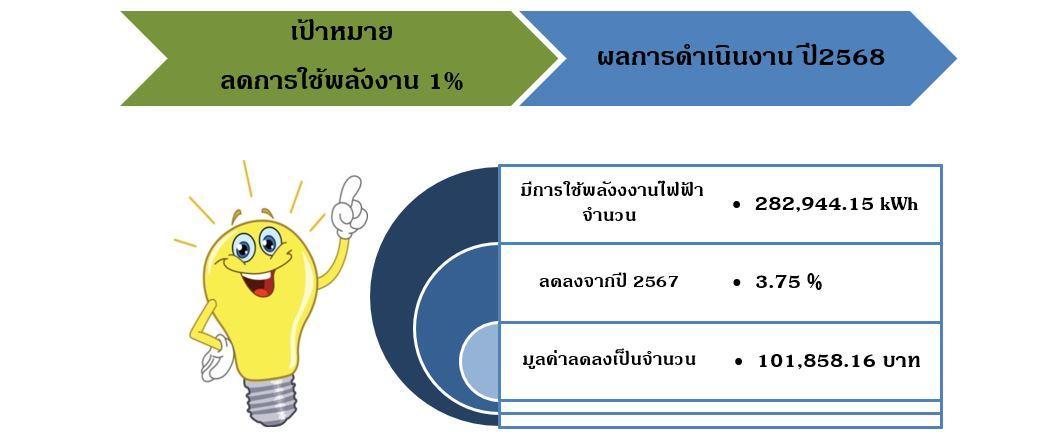
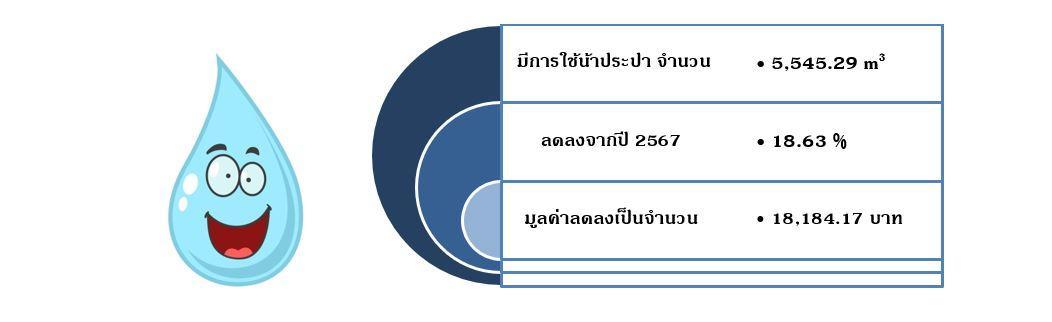
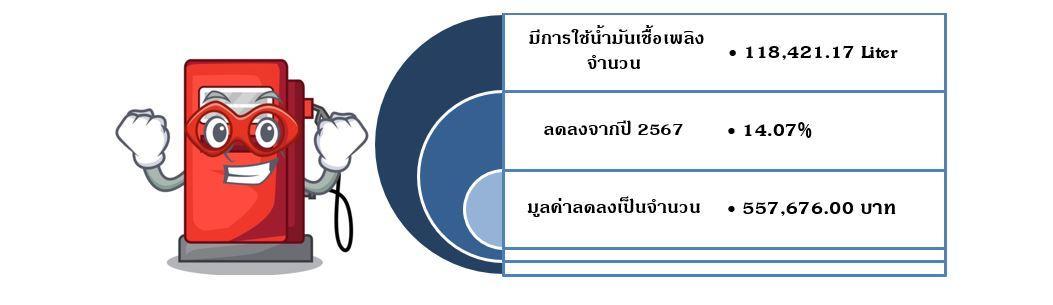
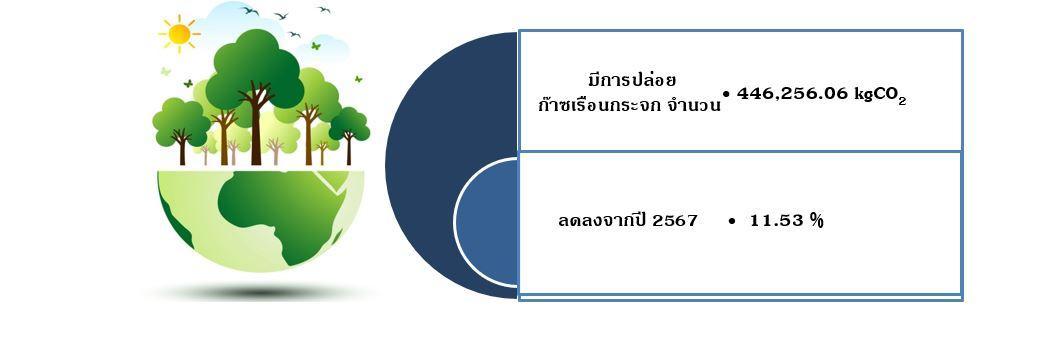
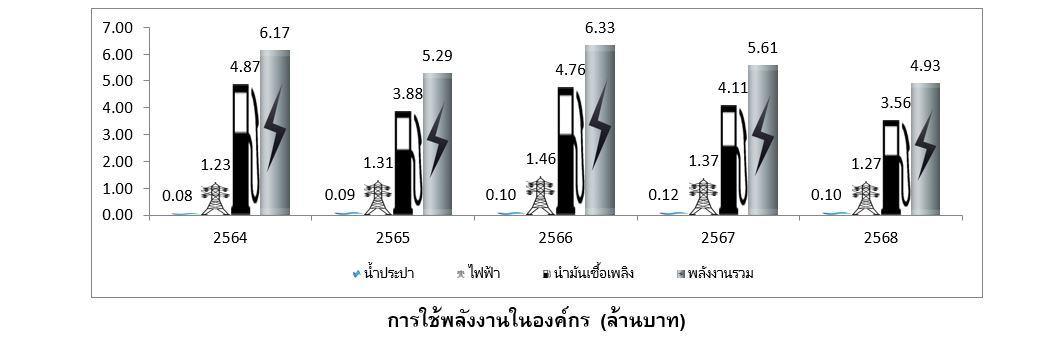
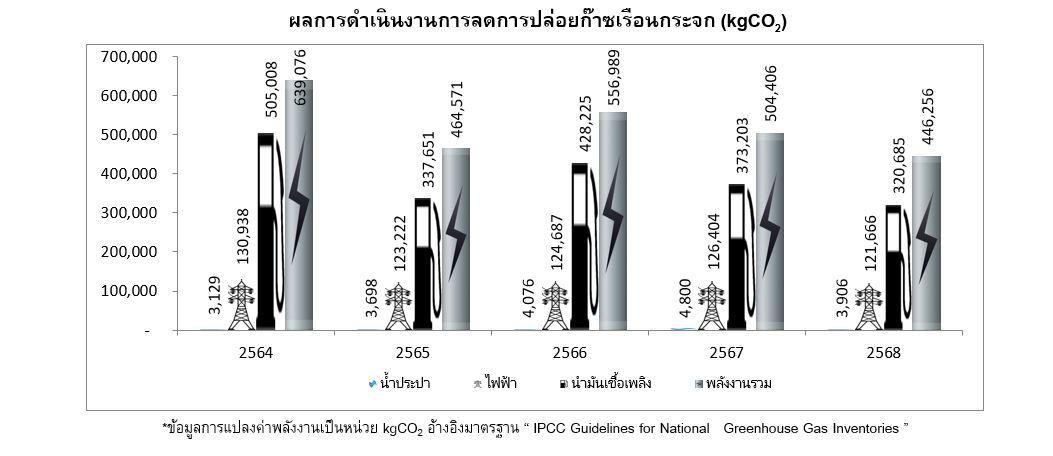
Energy Performance and Greenhouse Gas Emission Reduction (GRI103-3) The company has established an organizational energy consumption data collection system. By 2025, overall organizational energy consumption is expected to decrease by an average of 12.09% compared to 2024, resulting in an overall reduction of greenhouse gas emissions by 11.53%. In conclusion, under normal circumstances, the company's overall energy consumption continues to show a downward trend under the Energy Saving project.
Environmental Policy & Guidelines
Has an Environmental Policy
Yes
Policy Description
Environment Conservation
(1) The Company emphasizes on the rules and regulations which benefit to the social and environment for both public andprivate sectors, especially in all activities relating to the business operation, for example the regulations for radiation possession and utilization by the Office of Atoms for Peace, Ministry of Science and Technology, the regulations by the Department of Energy Business, Ministry of Energy, including all international regulations and practices.
(2) The Company promotes the project or activities of Corporate Social Responsibility (CSR) and Environment by the cooperation of the managements and employees in all departments. It allows stakeholders to participate in the activities of the Company in appropriate occasion and time.
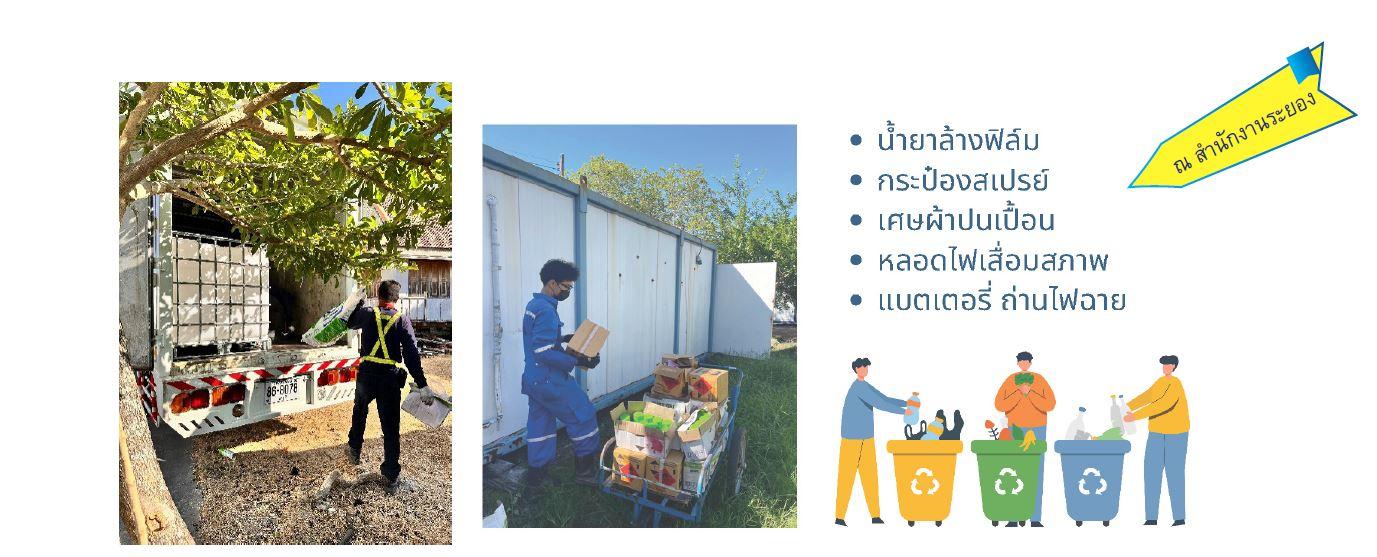
(3) The Company has managed to purchase with Green Procurement Policy. It’s ooperations are in accordance with the international standards and all relating regulations. On disposing of leftover wastes from the services, such as radioactive wastes, sprays cans or magnetic powder, these will be returned to the manufacturers or to the wastes disposal companies that have been licensed by the Department of Industrial Works, to be correctly disposed and shall not affect or be harmful to the society and environment. In the year 2025, the Company has disposed of the toxic wastes and unused of materials correctly and properly. The details were as follows :-
(3.1) The A.K. Mechanical and Recycle Company Limited and The Professional Waste Technology (1990) PCL. :
The companies which proceeded the disposal waste technically and legally, and were licensed with the Department of industrial work. There were :
1. 990 Kilograms of Chemical contaminated cloths.
2. 700 Liter of Radiographic processing chemicals.
3. 370 Kilograms of Waste residual spray cans.
4. 100 Kilograms of Batteries, Light bulbs wastes and vehicle batteries.
(3.2) The Manufacturer :
1. 36 Units of Radioactive wastes.
(4) The Company encourages employees to use resources and energy efficiently and/or modifies or recycles for the highest benefit, resulting to reduce the cost of operations, as well as to reduce the amount of waste collection which may have an impact on the community and the environment.
(5) The Employees’ Campaign of preliminary office operation waste separation is to prevent pollution from waste contaminated with hazardous substances to the environment within the community. For the office waste, preliminary separation before leaving in a big bucket is to facilitate in disposing, selling and taking as an expense in the activities of the Company later.
(6) Training and educating regularly in the matters pertaining to the environment and publicizing the Policy of Environment to the employees in order them to be aware of and comply with the policy which strictly focus on the standard practices and the environmental laws.
Environmental Guidelines
| Guideline |
|---|
| Electricity Management |
| Fuel Management |
| Water Management |
| Waste Management |
| Greenhouse Gas and Climate Change Management |
Environmental Policy Review
Policy Reviewed This Year
Yes
Review Details
Policy for Environment
The Company committed and intended to strictly comply with various standards and laws related to the environment. The Company has emphasized on the rules and regulations which would be beneficial to the social and environment for both public and private sectors, especially in all activities relating to the business operation, for example the regulations for radiation possession and utilization by the Office of Atomic for Peace, Ministry of Science and technology, the regulations by the Department of Energy Business, Ministry of Energy, etc., including all practices of International standards. It has also included the disposal of waste from the remaining material from the service, not to be burden and danger to society and the environment.
Guidelines
Focusing to reduce the environmental impact of materials and processes by assessment of the environmental impact of those things before input the new materials or start new production processes.
Finding ways to reduce energy consumption, reducing the amount of waste and pollution release to the environment.
Attempting to develop an environmental management system continuously. Enhance knowledge and understanding of all employees to provide for the most practical and administration.
Recognizing the importance of communication with the local community and keep good cooperation in environmental protection activities.
Publishing environmental policy, environmental management systems and the progress of the environmental project to employees and related party’s acknowledgement.
Mission Commitment Policy
For the NDT process, there are some materials affecting to the environment, such as radioactive substances, chemicals, chemical containers and the leftovers by the operation. Therefore, the Company has a policy of employees’ awareness and environmental consciousness by collaborating with both internal and external organizations to monitor, protect and inspect the Company’s environmental management in order to avoid problems occurring by the performance. The Company’s safety officers of each job site will look after the safety in operation including the impact on the environment by monitoring and controlling of all processes of waste management and leftovers on the technical basis.
In addition, the Company focus on the regulations defined as guidelines for social and environmental benefits of both the public and private sectors, especially in all activities related to business operations such as Radiation regulations of the Office of Atoms for Peace, Ministry of Science and Technology, Terms of the Department of Energy Business, Ministry of Energy, etc. and Practices of international standards such as radioactive waste, spray and magnetic cans, etc. The Company operates in accordance with the international standards and the related laws, such as returning the solid waste to the origin or authorized dealer or disposal center for hazardous waste management registered by the Department of Industrial Works and removing in the right way later, etc.
During the period of business operation, the Company has operated and adhered to the Declaration and Health, Safety and Environmental Policies. The Company has never faced any environmental disputes or complaints.
Mission
All of our activities are professionally operated, to prevent the employees or society from the risk of health.
Cooperation with all related parties to generate the environment and support the work safety.
Social responsibilities and environmental protection.
Compliance with local and official regulations strictly.
Encourage all TNDT employees to be knowledge and awareness of health, safety, and the environment.
Commitment
Make sure that all activities are conducted in a professional way with appropriate safeguards against exposing employees and general public to risk to their safety health.
Cooperate with all parties to create and promote the safe working environment.
Maintain its responsibilities on society and preserve the environment.
Carry out the work all time in compliance with local and government regulations.
Promote the knowledge and awareness of health, safety and environment matters in which all Thai NDT staff participate in developing of this commitment.
Policy
Conducts its activities and co-operates with all parties in compliance with all statutory requirements.
Keeps and carries out its responsibilities for health, safety and environmental matters through its management team to its employees at all level for implementing this policy in line with client’s HSE Guidelines.
Establishes working procedures and provides technical information with consideration of proper measures to prevent and protect against any damages on human resources and environment.
Promotes safety consciousness and familiarization with safety procedures, policy and regulations among its staff through safety meetings, safety induction, and safety training.
Policies & Guidelines Changed
| Change |
|---|
| Electricity Management |
| Fuel Management |
| Water Management |
| Greenhouse Gas and Climate Change Management |
Energy — Plan & Guidelines
Has an Energy Management Plan
Yes
Plan Description
The company has implemented the Energy Saving project, starting from creating awareness and creating good conscience in energy conservation by creating participation of employees at all levels in the organization through the project of Turn off (turn off the light switch after use), Adjust (adjust the air conditioner to 25% temperature), Unplug (unplug all electrical appliances after use), Reduce (close the faucet tightly after use and use only when necessary/reduce the speed as appropriate and turn off the engine when not in use), which are practices to reduce energy consumption for employees in the office and various branches to change the behavior of employees in the organization, as well as monitoring the results of the operation to continuously evaluate the success of the project.
Energy — Electricity Consumption
Electricity Consumption
| Metric | Current Year | Previous Year | Two Years Ago |
|---|---|---|---|
| Total electricity consumption within the organization (Kilowatt-Hours) | 282,944.15 | 293,962.05 | 289,970.76 |
| Electricity purchased for consumption from non-renewable energy sources (Kilowatt-Hours) | 282,944.15 | 293,962.05 | 289,970.76 |
| Electricity purchased or generated for consumption from renewable energy sources (Kilowatt-Hours) | 0 | 0 | 0 |
Energy — Fuel Consumption
Fuel Consumption
| Metric | Current Year | Previous Year | Two Years Ago |
|---|---|---|---|
| Jet fuel (Litres) | |||
| Diesel (Litres) | 118,421.17 | 137,814.83 | 158,133.38 |
| Gasoline (Litres) | |||
| Fuel oil (Litres) | |||
| Crude oil (Barrels) | |||
| Natural gas (Standard cubic feet) | |||
| LPG (Kilograms) | |||
| Steam (Metric tonnes) | |||
| Coal (Metric tonnes) |
Energy — Targets
Introduction
The Company has set targets and guidelines for operations by reducing the use of electricity, water, and fuel by 1% per year (compared to the previous year). This will directly reduce greenhouse gas emissions.
Has Set Targets
Yes
Targets
| Target | Base Year | Base Year Value | Target Year | Target Year Value | Target Change (%) | Unit |
|---|---|---|---|---|---|---|
| Reduction of fuel consumption | 2,024 | 137,814.83 | 2,025 | 118,421.17 | 14.07 | Litres |
| Reduction of electricity purchased for consumption | 2,024 | 293,962.05 | 2,025 | 282,944.15 | 3.75 | Kilowatt-hour |
Energy — Performance & Outcomes
Has Performance Results
Yes
Performance Description
Energy Saving Project (GRI103-2,3)
The company has implemented an Energy Saving project, starting with raising awareness and fostering a positive attitude towards energy conservation. This is achieved by engaging employees at all levels through the "Switch Off, Adjust, Unplug, Reduce" project, a set of practices to reduce energy consumption implemented across offices and branches. The goal is to change employee behavior and continuously monitor the project's progress to evaluate its success.
Water — Plan & Guidelines
Introduction
The Company has set targets and guidelines for operations by reducing the use of electricity, water, and fuel by 1% per year (compared to the previous year). This will directly reduce greenhouse gas emissions.
Has a Water Management Plan
Yes
Plan Description
Energy Saving Project (GRI103-2,3)
The company has implemented an Energy Saving project, starting with raising awareness and fostering a positive attitude towards energy conservation. This is achieved by engaging employees at all levels through the "Switch Off (Turn off the water tap completely after use and use only as needed.), Adjust, Unplug, Reduce" project, a set of practices to reduce energy consumption implemented across offices and branches. The goal is to change employee behavior and continuously monitor the project's progress to evaluate its success.
Water — Withdrawal, Discharge & Consumption
Water Withdrawal, Discharge & Consumption
| Metric | Current Year | Previous Year | Two Years Ago |
|---|---|---|---|
| Total water withdrawal (Cubic meters) | 5,545.29 | 6,814.96 | 5,787.94 |
| Total water withdrawal by third-party water (Cubic meters) | 5,545.29 | 6,814.96 | 5,787.94 |
| Total water withdrawal by surface water (Cubic meters) | |||
| Total water withdrawal by groundwater (Cubic meters) | |||
| Total water withdrawal by seawater (Cubic meters) | |||
| Total water withdrawal by produced water (Cubic meters) | |||
| Percentage of wastewater treated before discharge (%) | |||
| Total water discharge (Cubic meters) | 0 | 0 | 0 |
| Total water discharge to third-party water (Cubic meters) | |||
| Total water discharge to surface water (Cubic meters) | |||
| Total water discharge to groundwater (Cubic meters) | |||
| Total water discharge to seawater (Cubic meters) | |||
| Total water consumption (Cubic meters) | 5,545.29 | 6,814.96 | 5,787.94 |
| Recycled water (Cubic meters) | 0 | 0 | 0 |
Water — Targets
Has Set Targets
Yes
Targets
| Target | Base Year | Base Year Value | Target Year | Target Year Value | Target Change (%) | Unit |
|---|---|---|---|---|---|---|
| Reduction of water withdrawal | 2,024 | 6,814.96 | 2,025 | 5,545.29 | 18.63 | Cubic meters |
Water — Performance & Outcomes
Has Performance Results
Yes
Performance Description
Through the implementation of the Energy Saving project in 2025, the company was able to reduce water consumption by 18.63% (compared to 2024).
Waste — Plan & Guidelines
Has a Waste Management Plan
Yes
Plan Description
The company manages waste and leftover materials responsibly by applying the 3R principles: Recycle, Reuse, Reduce. Hazardous materials such as radioactive waste, aerosol cans, and magnetic powder are returned to their originators or distributors from whom the company purchased goods. These materials are then sent to licensed waste management companies registered with the Department of Industrial Works for proper disposal, preventing harm and danger to society and the environment.
Waste — Generation, Disposal & Recycling
Waste Generation, Disposal & Recycling
| Metric | Current Year | Previous Year | Two Years Ago |
|---|---|---|---|
| Total waste generated (Kilograms) | 2,160 | 2,077 | 3,735 |
| Non-hazardous waste (Kilograms) | |||
| Non-hazardous waste - Landfilling (Kilograms) | |||
| Non-hazardous waste - Incineration (with energy recovery) (Kilograms) | |||
| Non-hazardous waste - Incineration (without energy recovery) (Kilograms) | |||
| Non-hazardous waste - Other disposal operations (Kilograms) | |||
| Hazardous waste (Kilograms) | 2,160 | 2,077 | 3,735 |
| Hazardous waste - Landfilling (Kilograms) | |||
| Hazardous waste - Incineration (with energy recovery) (Kilograms) | |||
| Hazardous waste - Incineration (without energy recovery) (Kilograms) | |||
| Hazardous waste - Other disposal operations (Kilograms) | |||
| Total reused/recycled waste (Kilograms) | 0 | 0 | 0 |
| Reused/Recycled non-hazardous waste (Kilograms) | |||
| Reused non-hazardous waste (Kilograms) | |||
| Recycled non-hazardous waste (Kilograms) | |||
| Reused/Recycled hazardous waste (Kilograms) | |||
| Reused hazardous waste (Kilograms) | |||
| Recycled hazardous waste (Kilograms) |
Waste — Targets
Has Set Targets
No
Waste — Performance & Outcomes
Has Performance Results
Yes
Performance Description
The company disposes of hazardous waste and unused materials by sending them to AK Mechanical and Recycling Co., Ltd. and Professional Waste Technology (1990) Public Company Limited, both of which are properly licensed by the Ministry of Industry. In 2025, the company disposed of a total of 2,160 kilograms of waste and discarded materials, an increase of 83 kilograms from 2024, representing a 3.99% increase in proportion to the volume of services provided.
GHG — Plan & Guidelines
Has a GHG Management Plan
Yes
Plan Description
Energy Saving Project (GRI103-2,3)
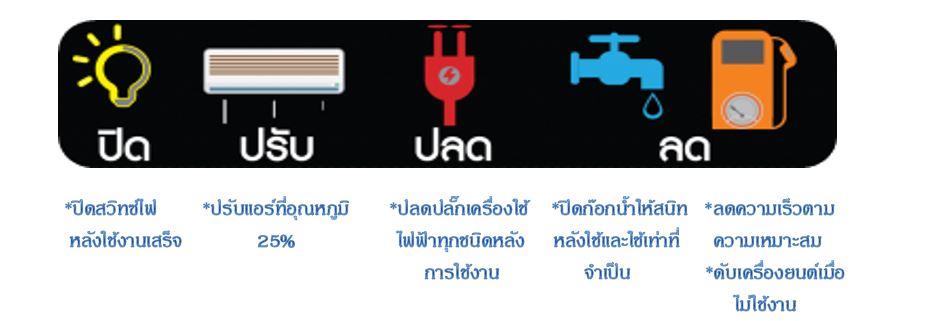
The company has implemented an Energy Saving Project, starting with raising awareness and fostering a positive attitude towards energy conservation. This is achieved through the participation of employees at all levels within the organization via the "Switch Off, Adjust, Unplug, Reduce" initiative. These are practical guidelines for reducing energy consumption implemented across the offices and branches, aiming to change employee behavior and continuously monitor the project's progress to evaluate its success.
GHG — Emissions
GHG Emissions
| Metric | Current Year | Previous Year | Two Years Ago |
|---|---|---|---|
| Total GHG emissions (Metric tonnes of carbon dioxide equivalent) | 446.25 | 504.41 | 556.99 |
| Total greenhouse gas emissions 1 (Metric tonnes of carbon dioxide equivalent) | 446.25 | 504.41 | 556.99 |
| Total greenhouse gas emissions 2 (Metric tonnes of carbon dioxide equivalent) | |||
| Total greenhouse gas emissions 3 (Metric tonnes of carbon dioxide equivalent) |
GHG — Emissions Verification
Emissions Verified by a Third Party
No
GHG — Principles & Standards
Principles & Standards Applied
| Standard | Other — Please Specify |
|---|---|
| 2734 | Energy Saving Project |
GHG — Targets
Has Set GHG Targets
Yes
GHG Targets — Other Targets
Other GHG Targets
| Emission Scope | Base Year | Base Year Emissions | Near-term Target Year | Near-term Target Value | Near-term Target Change (%) | Long-term Target Year | Long-term Target Change (%) | Target Year | Target Year Emissions | Target Change (%) | Unit |
|---|---|---|---|---|---|---|---|---|---|---|---|
| 2717 | 2,024 | 504,406.02 | 2,025 | 446,256.06 | 11.53 | 2,028 | 30 | 2,025 | 446,256.06 | 11.53 | Metric tonnes of carbon dioxide equivalent |
GHG — Performance & Outcomes
Has Performance Results
Yes
Performance Description
The company has established an organizational energy usage data collection system. By 2025, it was found that overall organizational energy consumption decreased by an average of 12.09% compared to 2024, resulting in an overall reduction of greenhouse gas emissions by 11.53%. In conclusion, under normal circumstances, the company's overall energy consumption continues to decline under the Energy Saving project.
Environmental Legal Incidents
Legal Violation Incidents
| Metric | Current Year | Previous Year | Two Years Ago |
|---|---|---|---|
| Number of cases or incidents of legal violations or negative environmental impact (cases) | 0 | 0 | 0 |
Other Environmental Management
Plan Description
Paper and Consumable Reduction Policy
1) Usage-related Measures
Use only as needed.
Set double-sided printing as the default.
Reduce printing of internal documents such as memos/reports; use files instead.
Review documents on the screen before printing every time.
2) Digital Conversion (Key Measures)
Use e-Documents / Cloud / Shared Drive.
Use a Document Management System (DMS / ECM).
Send documents via email or other systems instead of printing.
Use e-Meetings instead of distributing printed meeting documents.
3) Paper Reduction in Approval Processes
Use Digital Signatures.
Use an online approval workflow.
Use e-Tax Invoices / e-Receipts instead of physical documents.
4) Recycling and Reuse Policy
Use single-sided printing - print on the other side.
Set up recycling collection points.
Separate paper containing important information from general paper.
In 2025, the amount of paper and consumables used will decrease by 9.50% compared to 2024.
Social Policy & Guidelines
Has a Social Policy
Yes
Policy Description
Respect for Human Rights and Fair Labor Practice
The Company set up the policies and regulations under fundamental rights which the employees and their families are entitled to, with regards to the fairness, equality or greater than the basic standards which the employees should entirely be given. These are :-
(1) Distributing the benefits and incentives appropriate to the skills, equally and fairly.
(2) No violation of privacy, no disclosure, or no dissemination of employees’ personal data, including no arbitrarily handing over employees’ data to third parties except the legal proceedings.
(3) Support and encourage the employees to constantly develop their skills, study visit, attend seminar, and train both inside & outside of the organization and overseas training in order to develop new techniques according to the era and improve professional proficiency which will increase the quality, efficiency and adequacy of customer services in all process, as well as supporting new business lines of the Company.
(4) Encourage the employees to apply their skills in research and development to invent equipment, tools or new innovations which are practical, international standardized in order for the cost effectiveness of the organization and the customers.
(5) Provide a good workplace atmosphere, co-working spaces, the knowedge cener both the online through the Company’s website (www.tndt.co.th) and the library in the office. including preparing the necessary equipment to prevent accidents from work.
(6) Provide safety equipment and systems according to the rules and regulations for the employees, customers and the communities in order to prevent accidents from operation which may affect the lives, properties, environment and the reputation of the customers.
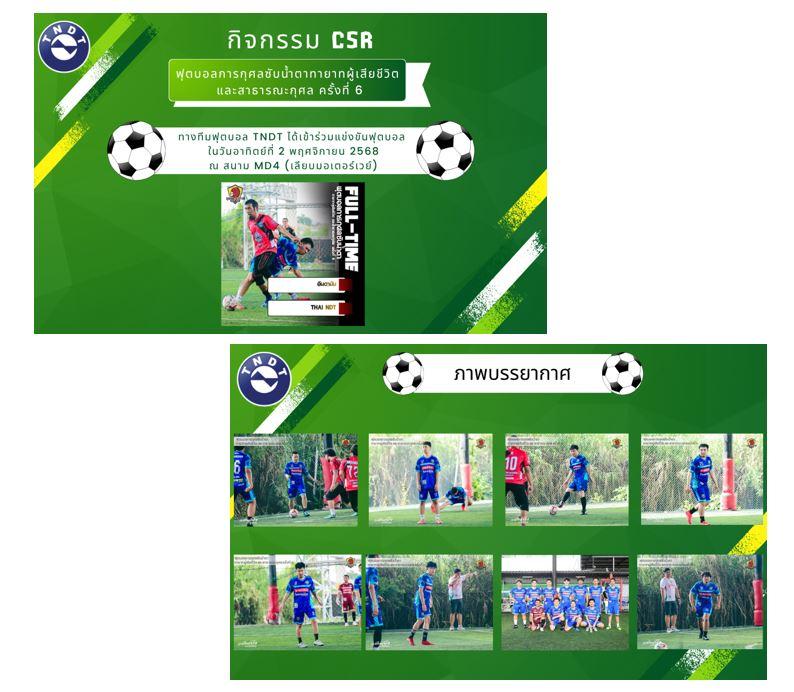
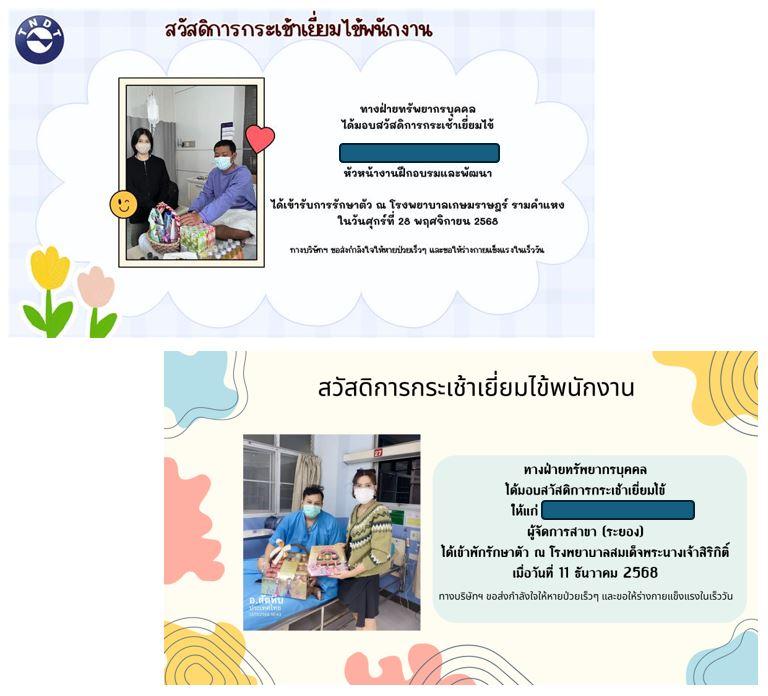
(7) Pay attention to the employees’ quality of life and occasional assistance, such as the area for Muslim prayers, breast milk and first aid room, sports promotion budget, visiting baskets in case of sickness and childbirth, vegetable plant for sharing project, etc. Additionally, the Company also provides the recreation area for the employees to relax or exercise, for example table-tennis tables, soccer pitches, petanque courts and courtyard for activities / parties on various occasions, etc. This is to promote good relationships and collaboration.
(8) Allow the employees to complain or suggest any topics concerning the business operations via channels such as Comment Box / E-Mail / postal / Human Resource Department / Company’s questionnaires, etc. The Company will not disclose any information of the complainants.
Independent Committee / Company Secretary Office /Whistleblowing Unit
Thai Nondestructive Testing Public Company Limited. 19 Soi Ramkhamhaeng 60 Yak 8 (Suason 8) Ramkhamhaeng Rd., Huamark, Bangkapi, Bangkok 10240
Independent Committee : independent@tndt.co.th
Company Secretary Office : secretary@tndt.co.th
Whistleblowing Unit : whistleblow@tndt.co.th
Website : https://www.tndt.co.th/th/contactus/
Tel. : +66 (0) 2-735-0801 (Auto 10 Lines)
Fax. : +66 (0) 2-735-1941
Support sports activities
Health Conscious
In 2024, the Company has strictly implemented guidelines to prevent and solve drug problems in the workplace. These were for employees’ good quality of lives, free from the drugs. For last year, there were random checks of alcoholand drug, no drugs addict was found at all.
In addition, the HSE section has prepared a list of employee health check-ups based on their risks, assessing differences in the work environment, hazards that employees are exposed to, such as chemicals, radioactive materials, or other activities that may cause employees to develop occupational diseases. This is to monitor or follow up on employee health problems or occupational diseases, so that employees are aware of their health and the likelihood of illness. If an illness is found in the early stages, treatment or prevention can be given promptly. In addition, employee health check-up results can be used to assess whether various preventive measures are effective or not.
1. Radiography (RT) inspection work, including radiation work, employees must work with radioactive materials (I-192) and film development processes, which employees must be exposed to chemicals.
2. Inspection of other NDT workpieces, such as MT, PT, UT, employees must be exposed to chemicals, dust, and loud noises.
3. Office work, employees must experience muscle aches due to sitting for long periods of time, as well as bright light from computer screens, etc.
Consumer Responsibility
(1) The Company emphasizes greatly on the rights of the customers and the co-workers in the operating area. There are trainings in cooperation with the customers regularly in order to provide knowledges and better understandings to the customers and their subsidiaries, for example NDT basic knowledge course, radiation safety training, basic knowledge of inspection and radiation emergency drills, in order that both the customers and the Company can benefit from the mutual understanding of the safety precautions and the services of the Company.
(2) Services: High efficiency for high quality in every step.
(2.1) Business Operations comply with the international standard procedures such as ASTM, ASME, etc. This includes the laws and regulations of related public entities, for example the Department of Energy Business, Office of Atoms for Peace or Thailand Institute of Nuclear Technology.
(2.2) Employ knowledgeable and specialized personnel who have been certified to the international standards, for example ASNT, API, ZSWIP, etc. Perform the task and report the outcomes according to the code of business conduct, moral and good virtue with precision, accuracy to meet the standards dictated and prohibit to change the results untruthfully.
(2.3) Use modern, high quality tools and equipment which meet the international standards and the better development of tools as well. The programs used must be licensed from the producers, as well as be updated and verified while the tools and equipment re-calibrated when the period is due by the producers and certified organizations such as the Office of Atoms for Peace, the Technology Promotion Association (Thai-Japan), Department of Medical Science, including organizations which are certified with ISO17025, for better accuracy of the inspections and results.
(2.4) Provide safety equipment and system according to the rules and regulations for the employees, customers and the communities in order to prevent accidents from operating which may affect the lives, properties, environment and the reputation of the customers.
(2.5) Deliver the results accurately, precisely, completely and within the given time.
(2.6) Constantly perform customers’ satisfaction in order to improve and develop the more efficient services, resulting in the highest level of customers’ satisfaction.
Community and Society Development
(1) The Company aims to understand all of the cultures and traditions in every operating area in order to coexist peacefully.
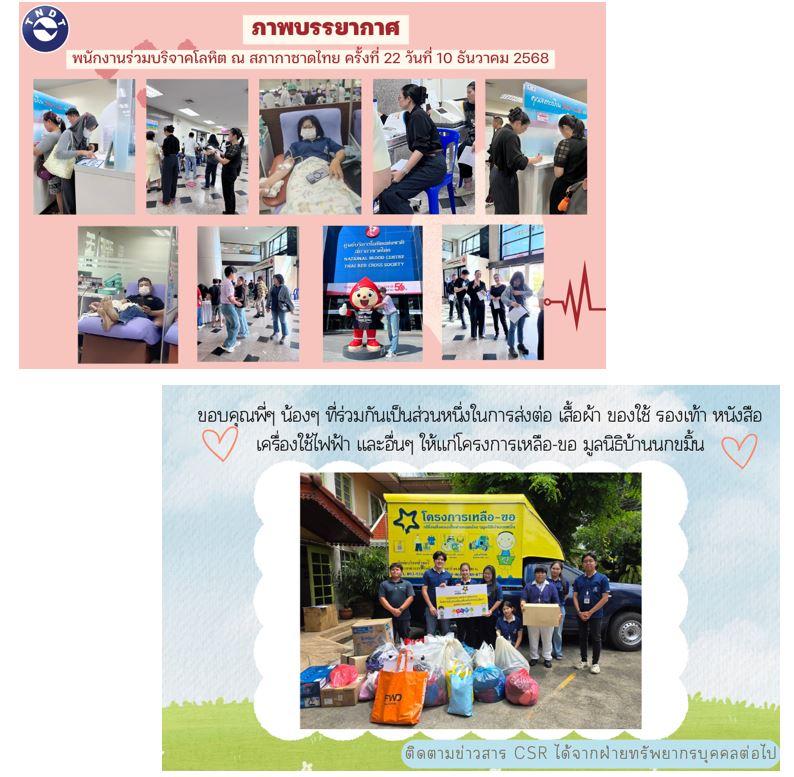
(2) The Company is willing to develop and generate the quality of lives, to provide work, to support the activities and help out the people of the communities and societies in appropriate occasion, such as donating old calendars to create Braille letter cards as teaching materials for the visually impaired, donation of clothes, materials, and old electrical appliances to “Baan Nok Kamin Foundation Project”. The Company also promoted careers for people with disabilities, such as growing vegetables to generate income, raising pigs, supporting products/products made by the Blind Music Group, donating IT equipment to the Phra Dabos Foundation, etc.
(3) The Company will not cause a negative impact to the communities near the operating areas and will conserve the environment and the resources in the vicini
Social activities
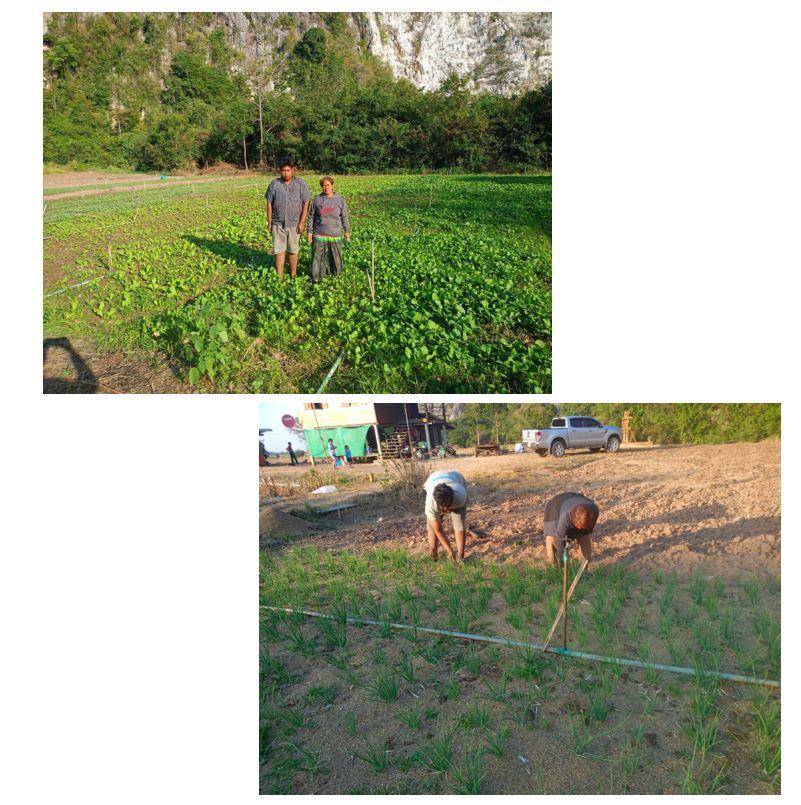
Promoted careers for people with disabilities
Project 1: Supporting projects for growing and selling fresh chili peppers, peanuts, and corn (Krabi).
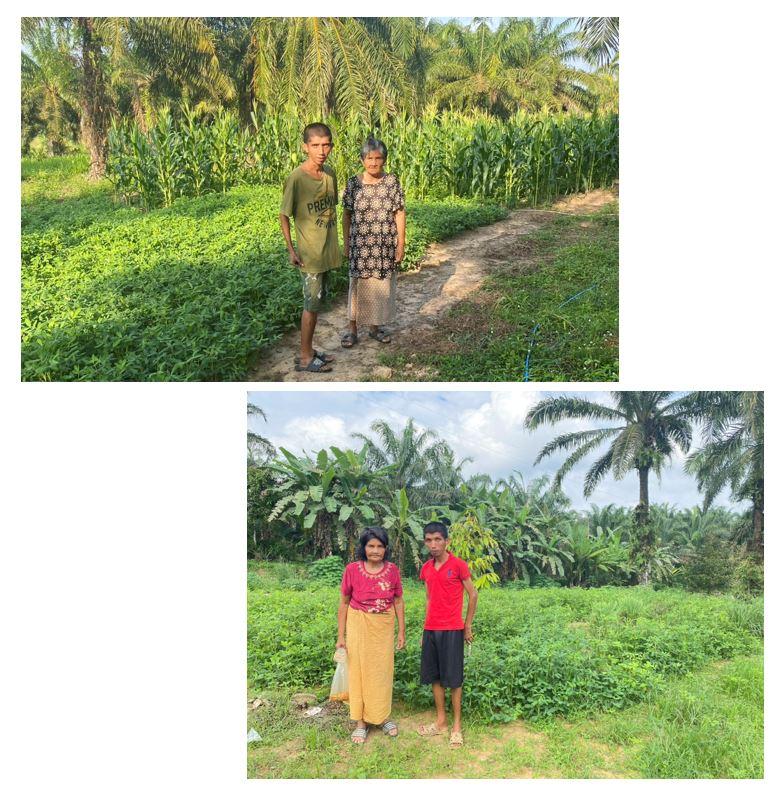
Project 2: Supporting home gardening projects (Uthai Thani)
Innovations and the Publicizing of Innovations
The Company has always supported employees with knowledge, expertise, and creativity. These will be the starting point to develop internal innovations for business advantages and readiness to transform to modern technologies, to apply in the business process along with the continuous development of useful ideas and value creation to the organization. In 2025, the innovations were carried out as follows:-
(1) The Company has formed the Creative Research and Development Division (CRD) (Organization Structure in 2021 changed to Advanced NDT & Maintenance Division) for personnel to research, develop and invent tools, equipment to be modernized innovations which are according to international standards and practicable. These are capable to create values in the services process with more efficiency. The Company has invented “the Semi-auto powered X-ray machine for oil and gas pipeline inspection by non-destructive testing”, obtaining the supporting fund from National Innovation Agency (NIA) under the project of “Technological transformation for financial support” in year 2017. Such machine would be modified to suit to the usage characteristics and has been operated continuously up till now in several projects of Natural Gas & Oil Transmission Lines.
(2) The establishment of the “The Light Lab” project to encourage employees with a creative background and a positive attitude to develop and expand their ideas, leading to the improvement of work processes, management, and business development in line with the times to support future changes. In 2021, employees were selected to participate in the pilot project. In 2022, the creation of innovative prototypes began. In 2023, the creation of product brands and the development of product directions began. However, due to unfavorable industrial and economic conditions in 2024, the project has been postponed
(3) Collaboration with partners from the public, private, and academic sectors to develop technology and innovation. Starting with the development of nuclear technology, which is the company’s core business. In 2025, the company has collaborated with partners to expand sterilization services with irradiation innovation to agricultural products such as rice to add value and improve the quality of life of farmers. In addition, the company also supports irradiation innovation in research to improve the quality of cocoa beans and other agricultural products.
(4) Improve work processes by applying new technologies and innovations to reduce redundant steps and assist in the allocation planning of business resources. Its internal database will be easily accessed and secure. This will enable organizations to co-work more effectively and respond to current business operations.
Policy Document Link
https://www.tndt.co.th/en/sustainability/sustainability-policy/respect-for-human-rights-and-fair-labour-practice-policy/
Social Guidelines
| Guideline |
|---|
| Employee Rights |
| Migrant Workers |
| Consumer Rights |
| Community and Environment Rights |
| Safety and Occupational Health at Work |
| Non-discrimination |
| Business Partner Rights |
Employees — Plan & Guidelines
Has an Employee Management Plan
Yes
Plan Description
Executives’ Remuneration
1) Remuneration
in Cash In year 2025, total of 5 Executives from division managers or higher received total remuneration in cash from the Company. They are salary and other income, providence fund and bonus (if any).
(2) Other Remunerations
- Vehicles for the Company Management Affairs.
- Other expenses and benefits according to the Company’s Rules and Regulations.
Item | Amount (Bath) | ||
2023 | 2024 | 2025 | |
Salary, Other Income | 8,093,940.00 | 6,726,190.00 | 7,554,199.00 |
Bonus | - | - | - |
Providence Fund | 510,936.00 | 510,936.00 | 550,936.00 |
Welfare | 127,784.10 | 296,034.65 | 683,366.82 |
Total | 8,732,660.10 | 7,533,160.65 | 8,788,501.82 |
Employees’ Remuneration
1) Remuneration in Cash
The Company’s policy in remunerating for its employees is on the basis of appropriateness, fairness, knowledge, capability, performance, and compatibility with the industry’s average pay scale. Moreover, the employees’ remunerations must be appropriate to the business expansion and the Company’s growth.
In year 2025, total remuneration which the employees received in cash from the Company are salary and other income, providence fund, professional fee, and bonus (if any), etc.
The Company has established provident fund in the Company’s name for all the Company’s employees by appointing KasikornFund Management Company Limited as the fund manager, starting from 1 January 2005. The Company would contribute to the fund at the amount 5-10% of employees’ salary, depending on working duration. The employees shall contribute no less than 5% of salary, anyway no exceeding the amount contributed by the Company.
Since January 1, 2017 onwards, the Company’s provident fund has been transferred to K Master Pool Fund of Kasikorn Fund Management. The employees can contribute at 5-15% of employees’ salary since starting the membership, while the Company still contributes to the fund the same rate at 5-10%. The purposes are for the employees’ capabilities to select individual investment as appropriate, in order to generate the good returns in both short and long term. The returns are based on the age and type of funds they select, so as them to save for future and / or financial security after retirement. Currently, there are 37 fund members.
2) Other Remunerations
Moreover, the Company has provided various benefits for employees according to the law. The Company has adjusted and increased its welfare and fringe benefit offering to the employees, for example, healthcare payments, group life and accident insurance and annual health check for employees, and other types of financial and non-financial assistance such as funds for the funeral arrangements of employees, their parents, children or legal spouse, the marriage, the monk ordinations, emergency loan, preparing reliable sources providing the loan with special interest rate for housing, etc.
Item | Amount (Bath) | ||
2023 | 2024 | 2025 | |
Salary, Other Income | 85,262,518.00 | 81,074,889.00 | 81,292,160.00 |
Bonus | - | - | - |
Providence Fund | 877,758.00 | 728,524.00 | 809,147.00 |
Professional Fees | 2,150,607.00 | 2,325,865.00 | 2,430,280.00 |
Welfare | 506,758.63 | 537,383.94 | 502,175.52 |
Total | 88,797,641.63 | 84,666,661.94 | 85,033,762.52 |
Sex | No. of People | Investment Plan | No. of People | Employee | Company | ||
Female | 13 People | Plan 1 | 4 People | 5% | 4 People | 5 % | 6 People |
Plan 2 | 6 People | 6% | 2 People | 6% | 2 People | ||
Plan 3 | 1 People | 10% | 5 People | 10% | 5 People | ||
Plan 4 | 2 People | 14% | 1 People | ||||
15% | 1 Peopl | ||||||
Sex | No. of People | Investment Plan | No. of People | Employee | Company | ||
Male | 24 People | Plan 1 | 11 People | 5% | 6 People | 5 % | 9 People |
Plan 2 | 5 People | 7% | 1 People | 6% | 1 People | ||
Plan 3 | 6 People | 8% | 1 People | 8% | 2 People | ||
Plan 4 | 2 People | 9% | 1 People | 10% | 12 People | ||
10% | 9 People | ||||||
11% | 1 People | ||||||
15% | 5 People | ||||||
Number and Level of Employees
1) Number of Employees
Sex | Amount (People) | ||
2023 | 2024 | 2025 | |
Male | 180 | 177 | 157 |
Female | 66 | 67 | 73 |
Total | 246 | 244 | 230 |
2) Level of Employees
Level of Employee | Number of Employee (People) | ||
Male | Female | Total | |
C-Level | 3 | 1 | 4 |
Executive-Department | 7 | 3 | 10 |
Executive-Division | 5 | 0 | 5 |
Manager-Section | 4 | 1 | 5 |
Company Secretary | 0 | 4 | 4 |
Engineer | 17 | 1 | 18 |
Technical Supervisor | 14 | 8 | 22 |
Technician | 88 | 4 | 93 |
Office / Admin Clerk | 18 | 51 | 69 |
Total | 157 | 73 | 230 |
Significant changes in the number of employees in the past 3 years
- None -
Major labor disputes in the past 3 years
1. In August 2022, the company, as the plaintiff, filed a lawsuit against the Labor Inspector (Defendant No. 1) and the company's subcontractor at the Labor Court Region 6. The claim amounted to 665,000 baht. The case has now concluded, with the company paying the subcontractor 665,000 baht in compensation, plus interest at 15% per annum.
2. In September 2022, the company was sued in another labor case at the Central Labor Court. The claim amounted to 240,000 baht. This case has also concluded, with the company paying the employees 240,000 baht in compensation, plus interest at 15% per annum.
Plan Areas
| Plan Area |
|---|
| Fair employee compensation |
| Employee training and development |
| Promoting employee relations and participation |
| Migrant/foreign labor |
| Occupational health and safety in workplace |
Employees — Workforce
Employees with Disabilities — Introduction
The company implements a project to promote employment for people with disabilities by granting them the rights under Section 35 of the Act on the Promotion and Development of the Quality of Life of People with Disabilities B.E. 2550 (2007) and its amendments (No. 2) B.E. 2556 (2013), which concerns providing other assistance to people with disabilities or their caregivers, in accordance with the regulations of the National Committee on the Promotion and Development of the Quality of Life of People with Disabilities.
In 2025, the company supported two people with disabilities, totaling 264,990 baht.
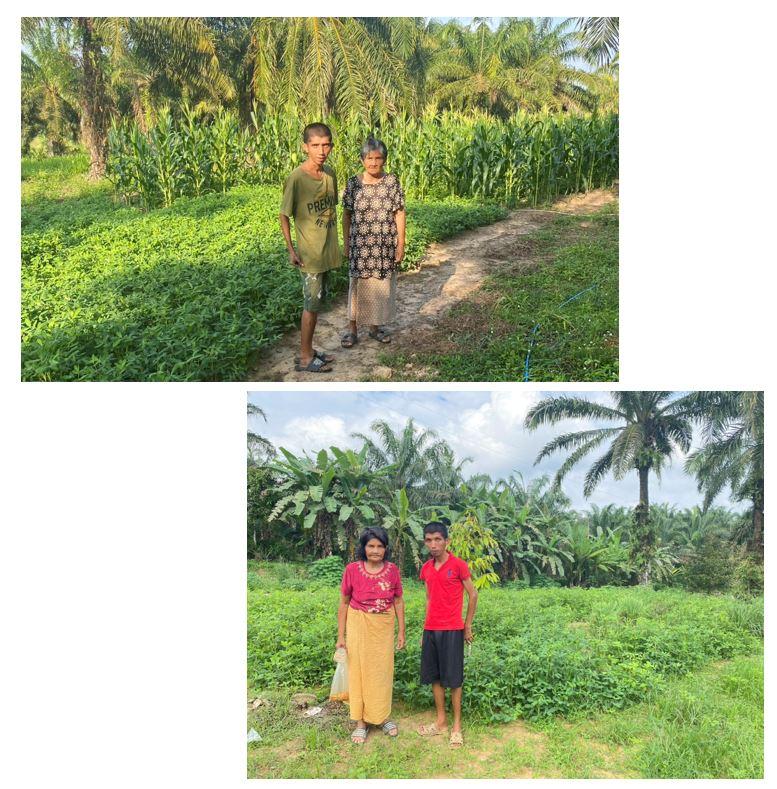
Workforce Data
| Metric | Current Year | Previous Year | Two Years Ago |
|---|---|---|---|
| Total number of employees (Persons) | 230 | 244 | 245 |
| Number of male employees (Persons) | 157 | 177 | 179 |
| Number of female employees (Persons) | 73 | 67 | 66 |
| Total employment of disabled persons (people) | |||
| Total disabled employees (people) | |||
| Total male disabled employees (people) | |||
| Total female disabled employees (people) | |||
| Total disabled workers who are non-employee (people) | |||
| Contributions to the fund for promoting and improving the quality of life for disabled persons | |||
| Total number of male employees in operational level (Persons) | 142 | 166 | 166 |
| Total number of male employees in management level (Persons) | 12 | 8 | 10 |
| Total number of male employees in executive level (Persons) | 3 | 3 | 3 |
| Total number of female employees in operational level (Persons) | 69 | 64 | 63 |
| Total number of female employees in management level (Persons) | 3 | 2 | 2 |
| Total number of female employees in executive level (Persons) | 1 | 1 | 1 |
Employees — Remuneration & Provident Fund
Remuneration & Provident Fund
| Metric | Current Year | Previous Year | Two Years Ago |
|---|---|---|---|
| Total disabled employees (people) | 85,033,762 | 84,666,661 | 85,262,518 |
| Total male employee remuneration (Baht) | 69,283,462 | 65,534,264 | 70,149,951 |
| Total female employee remuneration (Baht) | 15,750,300 | 19,132,397 | 15,112,567 |
| Number of employees eligible to participate in PVD (persons) | 71 | 58 | 60 |
| Total number of employees joining employee provident fund (Persons) | 37 | 30 | 30 |
| Percentage of total number of employees joining employee provident fund to total number of employees (%) | 16.09 | 12.3 | 12.24 |
| Number of PVD members / Total eligible employees (%) | 52.11 | 51.72 | 50 |
| Total amount of provident fund contributed by the Company (Baht) | 809,147 | 728,524 | 877,758 |
| Total amount of provident fund contributed by employee (baht) | 955,290 | 809,404 | 911,403 |
Employees — Training & Development
Training Data
| Metric | Current Year | Previous Year | Two Years Ago |
|---|---|---|---|
| Average employee training hours (Hours / Person / Year) | 26.95 | 17.65 | 17.15 |
| Employee development and training expenses (baht) | 556,372.85 | 452,342.64 | 1,052,790 |
Employees — Occupational Health & Safety
Introduction
The company continues to conduct KYT (Know Your Task) activities to support occupational health and safety. This involves analyzing or predicting potential workplace hazards, emphasizing greater departmental involvement. This not only allows employees to participate in identifying and defining workplace hazard prevention methods but also fosters unity and builds a safety awareness in the workplace.
Occupational Health & Safety Data
| Metric | Current Year | Previous Year | Two Years Ago |
|---|---|---|---|
| Total number of lost time injury incidents by employees (Cases) | 2 | 2 | 0 |
Employees — Labour Relations
Labour Relations Data
| Metric | Current Year | Previous Year | Two Years Ago |
|---|---|---|---|
| Total voluntary resignations (Persons) | |||
| Male employees who voluntary resigned (Persons) | |||
| Female employees who voluntary resigned (Persons) | |||
| Percentage of employee turnover leaving the Company voluntarily (%) | 24.35 | 23.77 | 27.35 |
| Evaluation result of employee engagement |
Employees — Employee Representation
Employees Are Represented Collectively
Yes
Forms of Representation
| Form |
|---|
| Welfare committee |
Employees — Targets
Has Set Employee Targets
Yes
Targets
| Indicator | Target Areas | Base Year | Base Year — Description | Target Year | Target Year — Description |
|---|---|---|---|---|---|
| Health, Safety and Environment | 2988 · Description: Safety and occupational health at work | 2,025 | In 2025, there were a total of 13 incidents/accidents, consisting of 2 vehicle accidents and 4 work-related accidents. Additionally, there were investigations and reports regarding 7 cases of workers being exposed to high levels of radiation.
| 2,026 | In 2026, the Occupational Safety, Health, and Environment department plans to implement measures to prevent vehicle accidents by establishing HSE KPIs for preventing and reducing vehicle-related incidents/accidents and reducing the number of workers exposed to high levels of radiation. These HSE KPIs will be evaluated and reviewed every two months, with incentive programs to support management. Registered company drivers will be required to undergo a Defensive Driving (DDC) refresher course once every two years, motorcycle drivers annually, and radiation workers annually. Monitoring and control of daily radiation exposure recording by employees will be conducted, along with aligning KYT (Know Your Task) activities with vehicle driving and radiation protection, and rigorously testing and verifying KYT activities. These activities will be monitored and evaluated within the Occupational Safety, Health, and Environment audit framework for on-site inspections.
Regarding other occupational hazard prevention measures, training programs on occupational and environmental diseases will be implemented. For all employees, the first aid training program will be increased from 80% to 100%, and other activities will be managed according to the established annual plan. |
Employees — Performance & Outcomes
Has Performance Results
Yes
Performance Description
Safety, Health, and Environment Awards
Due to strict adherence to policies and practices, in 2025 the company received awards in the areas of safety, health, and environment. These included a certificate of participation and successful completion of 1,000,000 work hours without any serious or lost-time accidents in the Zawtika Development Project Phase 1E of CUEL.
Customers — Plan & Guidelines
Has a Customer Management Plan
Yes
Plan Description
The company is committed to providing services that ensure the safety of life, property, and the environment, upholding honesty, fairness, attentiveness, responsibility, and quality service. This is based on professional ethics, international standards, and relevant laws. Client information is kept confidential from the initial stages until the delivery of accurate and reliable inspection results to the industry or clients, confirming the quality and safety of the inspected products, processes, or components. Furthermore, the company prioritizes the rights of clients and those around the work area. Safety training is provided to build understanding and confidence in collaborative work and to ensure trust in the company's services.
Practices
The company provides efficient services to clients, including advice, consultation, and the selection of modern, standardized tools and equipment to ensure accurate, precise, and high-quality results.
Business operations and processes adhere to international standards, as well as the requirements and laws of relevant government agencies such as the Department of Energy Business, the Office of Atomic Energy for Peace (OAEP), the Nuclear Institute, etc.
Personnel possessing knowledge, expertise, and proficiency are consistently tested and certified according to international and other relevant standards.
Service reports are submitted professionally, ethically, and morally, accurately, and without bias, adhering to established standards. Or correct test results that do not meet standards as requested by the customer. Use modern, high-quality tools and equipment that meet international standards and are continuously improved.
Use licensed software from manufacturers, verify and calibrate instruments at the intervals specified by the manufacturer and accredited organizations to ensure the accuracy of test and inspection results.
Deliver accurate, precise, complete, and timely test results.
Provide safety systems and equipment in accordance with regulations and laws for employees, customers, and the community to prevent potential hazards arising from operations and impacting lives, property, the environment, and the reputation of customers.
The company provides training to educate customers on the company's inspection and testing services, and conducts emergency drills to ensure safe collaboration.
The company offers services at reasonable prices and charges accurate and truthful fees.
The company prioritizes customer care and responsibility towards service quality, safety during service, and after-sales service. The company values the confidentiality of customer data, documents, test and inspection results, and will not disclose them for personal gain or the benefit of other related parties.
The company is committed to building customer satisfaction and confidence by providing high-quality services under appropriate safety and technology, and continuously raising standards.
The company regularly surveys customer satisfaction and needs, as well as acknowledging customer problems and complaints.
Plan Document Link
https://www.tndt.co.th/en/sustainability/sustainability-policy/policy-for-customer/
Plan Areas
| Plan Area |
|---|
| Responsible production and services for customers |
| Communication of product and service impacts to customers/consumers |
| Development of customer satisfaction and customer relationship |
| Protection of customer personal information |
Customers — Satisfaction Results
Customer Satisfaction Results
| Metric | Current Year | Previous Year | Two Years Ago |
|---|---|---|---|
| Evaluation results of customer satisfaction | 1 | 1 | 1 |
Customers — Targets
Has Set Customer Targets
Yes
Targets
| Indicator | Target Areas | Target Year | Target Year — Description |
|---|---|---|---|
| In the customer satisfaction assessment . | 3009 · Description: Development of customer satisfaction and customer relationship | 2,025 | In 2025, the company received an average score of 97.33%, which is in the "very good" category, exceeding the company's target of 72.97%.
(Data from 550 customer satisfaction surveys) |
Customers — Performance & Outcomes
Has Performance Results
Yes
Performance Description
Based on customer satisfaction assessments in 2025, the company received an average score of 97.33%, classified as "Excellent," exceeding its target of 72.97%. When considering individual aspects, the five areas of highest customer satisfaction were:
(Data from 550 customer satisfaction surveys)
1. Returning service to TNDT: 100%
2. Management: 99.27%
3. Departmental communication: 99.09%
4. Quality of work: 98.44%
5. Project completion time: 98.44%
Furthermore, in cases of customer complaints or failure to meet company evaluation criteria, the company will promptly collaborate with the relevant department to analyze the root cause, develop solutions, and implement preventative measures to avoid recurrence. The company will monitor the resolution process and promptly inform customers of the results and solutions.
Community & Social — Plan & Guidelines
Has a Community & Social Plan
Yes
Plan Description
Details, see section 3.4, Managing Sustainability in the Social Dimension, topic 3.4.1, Social Policies and Practices, page 96-123
Plan Areas
| Plan Area |
|---|
| Religion and culture |
| Occupational health, safety, health, and quality of life |
| Disadvantaged and vulnerable groups |
Community & Social — Targets
Has Set Community & Social Targets
No
Community & Social — Performance & Outcomes
Has Performance Results
Yes
Performance Description
Innovation (Knowledge Management)
The company received the comprehensive quality standard award (OAP Award) for the year 2025 at the "Excellent" level for Type 1 radiation generators in the industry category, on August 14, 2025, from the Ministry of Higher Education, Science, Research and Innovation, through the Office of Atomic Energy for Peace.
Law Violation Incidents
Law Violation Incidents
| Metric | Current Year | Previous Year | Two Years Ago |
|---|---|---|---|
| The total number of cases or incidents of significant violations of laws or regulations regarding social and human rights (Cases) | 0 | 0 | 0 |
| The total number of cases or incidents that cause significant labor disputes (Cases) | 0 | 0 | 0 |
| The total number of cases or complaints related to consumer rights violations (Cases) | |||
| The total number of cases or complaints related to partner rights violations (Cases) | |||
| The total number of cases or incidents that cause disputes with the community/society (Cases) | |||
| The total number of cases or incidents related to cyber security or customer data breaches (Cases) | |||
| The total number of cases or incidents related to safety and occupational health at work (Cases) |